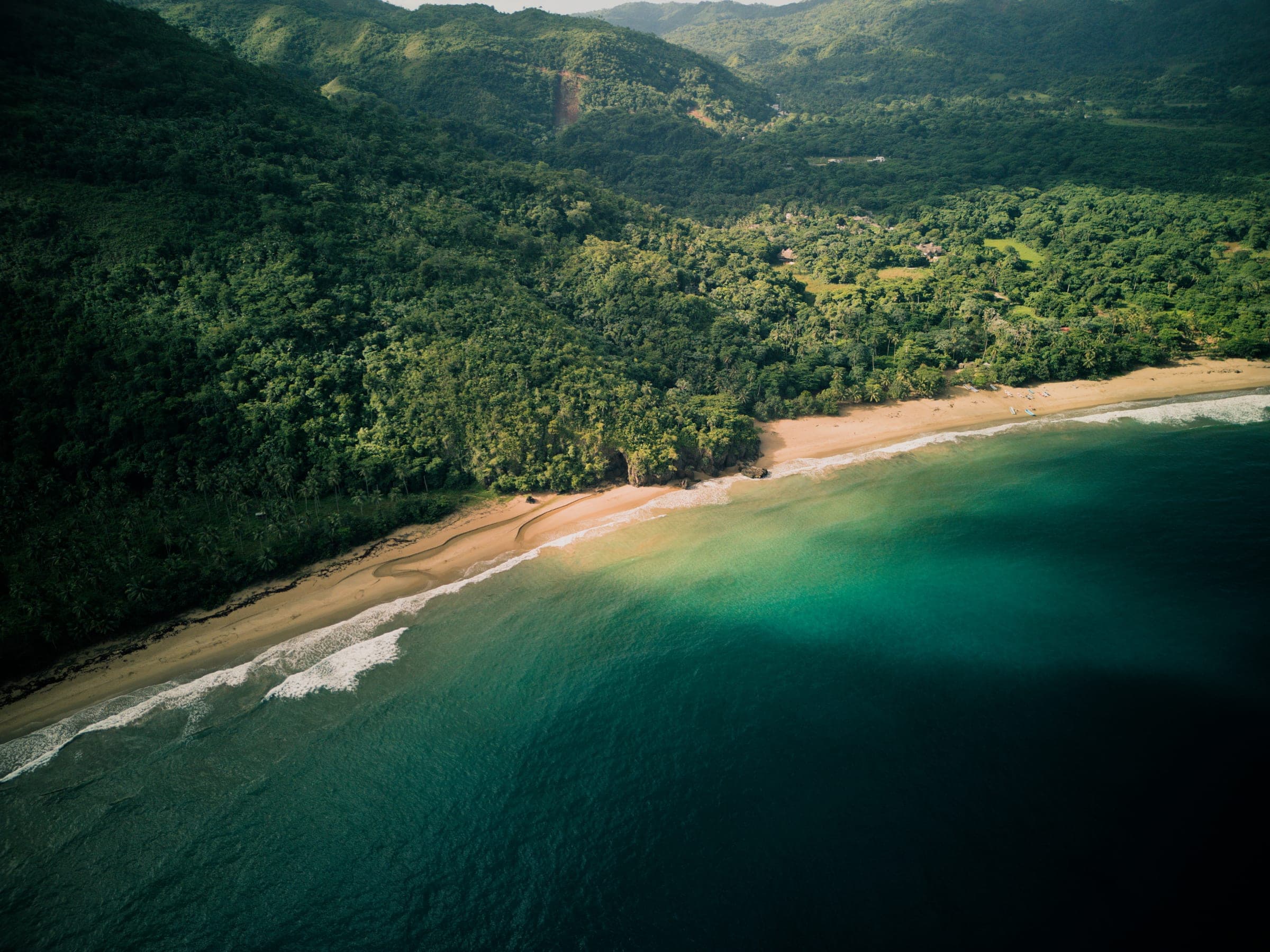
A valley that has always known how to live well.
Remote enough to stay itself. Close enough to matter. El Valle sits at the convergence of mountain, river, and sea — and has been doing so long before anyone thought to develop it.
Where the mountains meet the Caribbean.
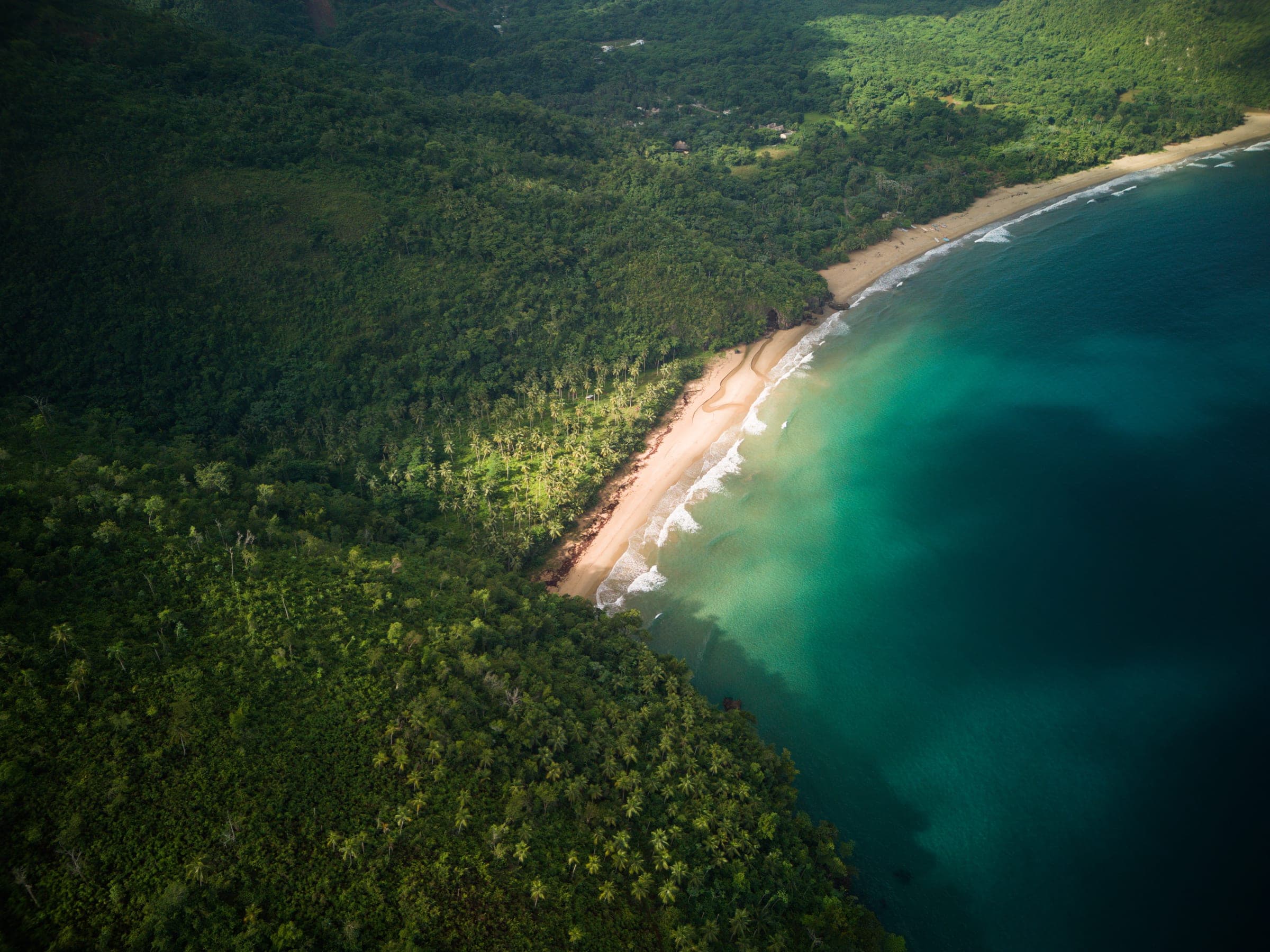
El Valle sits on the northeastern coast of the Samaná Peninsula — one of the most ecologically rich regions in the Caribbean. The valley is framed by jungle-covered hills, threaded by rivers, and opens onto a pristine beach that sees a fraction of the visitors that arrive at more developed parts of the island.
The town itself has existed for generations as a farming and fishing community. Its character is unhurried, warm, and deeply rooted. That character is what we're here to protect.
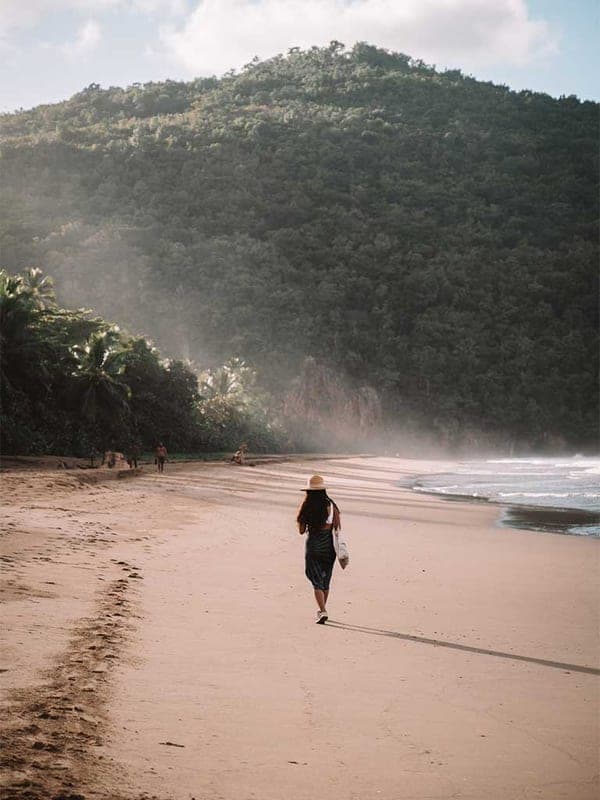
A single road to a stunning beach.
For years, one unpaved track connected El Valle to the rest of the peninsula. In the wet season it flooded. In the dry season it was dust. That road did what geography alone rarely manages: it kept the wrong kind of interest out.
No resort chain ran the numbers and liked them. No developer plotted a master plan. The valley stayed a farming and fishing community - not by design, not by preservation policy, but by friction. The kind of place that remained itself because arriving here required wanting to.
The road is paved now. The infrastructure is coming. What kept El Valle hidden is gone. What it protected is still here - for the moment.
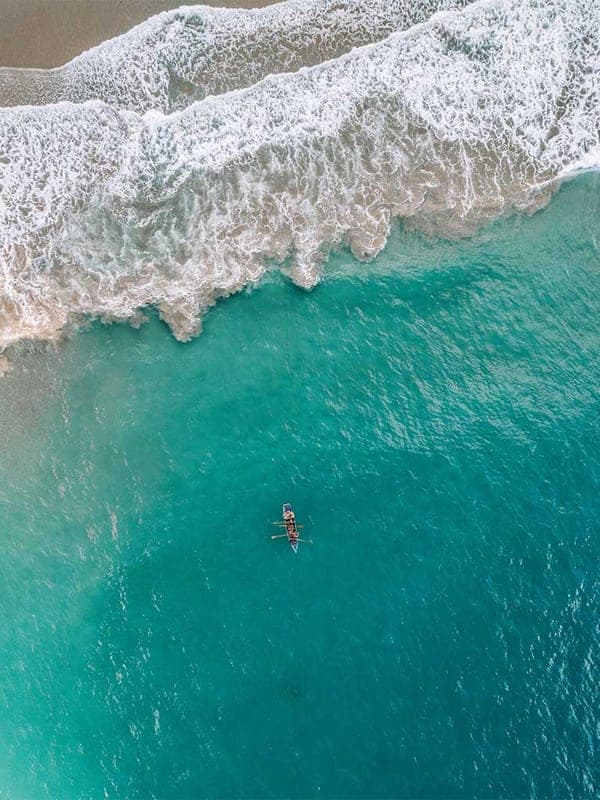
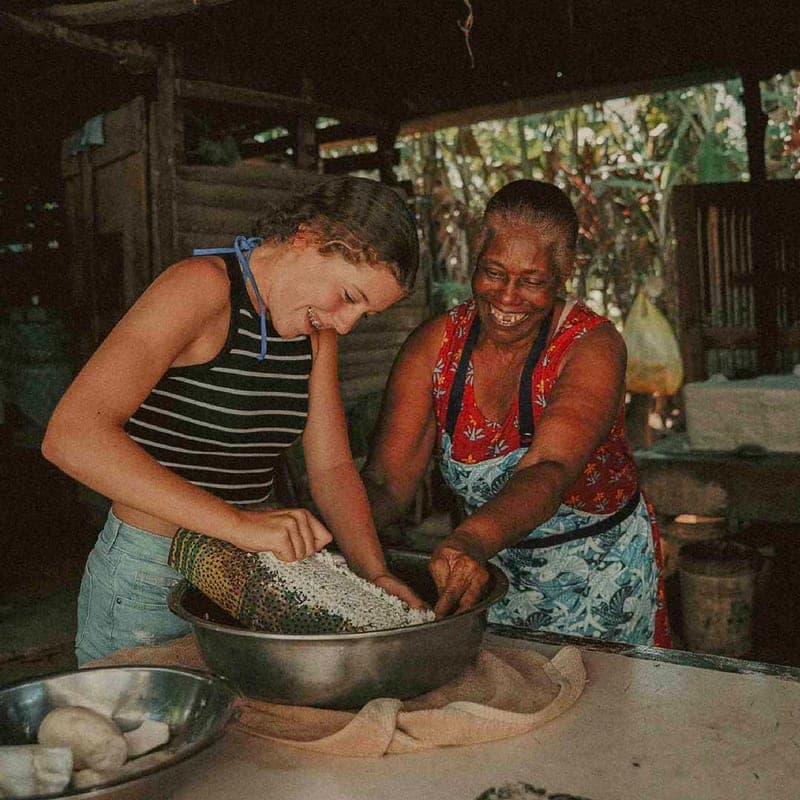
The people are the place.
El Valle has been inhabited for generations. The families here know the bay by season, the river by name, the mountain paths by foot. They didn't build this place around tourism. Tourism arrived and found something already whole.
What that produces is rare. A warmth that isn't performed for visitors. Neighbors who stop on the road. A beach that's empty on a Tuesday because the people who live here don't need to fill it. A waterfall within walking distance that locals still visit on weekends, because some things don't require a reason.
The development happening in El Valle now is happening inside this community - not on top of it. That's the thing worth protecting. And the reason the people who find this place tend not to leave.
The window that exists once.
Every place that becomes beloved went through a moment — before the prices shifted, before the character diluted, before the crowd arrived. El Valle is in that moment right now.
The road is paved. The infrastructure is coming. The people who are here now will be the ones who shaped what it became. That window closes. It always does.
The questions we hear most.
Where is El Valle, Samaná?
El Valle is a secluded valley and beach on the north coast of the Samaná Peninsula in the Dominican Republic, about 15 minutes northeast of the town of Santa Bárbara de Samaná. It sits between jungle-covered mountains and opens onto Playa El Valle — one of the country's last wild beaches.
How do you get to El Valle Samaná?
It's roughly a three-hour drive from Santo Domingo and about 45 minutes from Samaná's airport. The last stretch is a mountain road that drops down into the valley and out to the beach.
Can foreigners buy land in the Dominican Republic?
Yes. Foreigners have the same ownership rights as Dominican citizens and can buy and hold titled land and property outright, including in Samaná. There are no special restrictions on foreign ownership, and purchases are registered with formal title.
Is El Valle a good place to invest in real estate?
El Valle is one of the last undeveloped valleys on the Samaná coast — low density, no resorts, and early-stage prices compared with nearby Las Terrenas. It rewards buyers with a long horizon who value the land and the community over a quick flip.
What is El Valle known for?
Playa El Valle, a wild golden-sand beach ringed by jungle mountains; slow, low-impact travel; whale season on the Samaná Peninsula; and being the filming location for M. Night Shyamalan's 2021 film Old. There are no large resorts — just small eco-lodges and open nature.
How is development in El Valle different?
It's regenerative and anti-extractive — building with the land and the community that already lives here, not displacing them. The goal is a place that's healthier and more alive after development than before it.
Ready to see it for yourself?
The best thing we can tell you about El Valle is to come. But a 30-minute call is a good place to start.