Investor guide
Buying land in the Dominican Republic
How ownership actually works for foreigners, what a clean title looks like, and the pitfalls that catch first-time buyers — from people who buy and develop land here every year.
The Dominican Republic is one of the most straightforward countries in the Caribbean for foreigners to own land — full ownership, same rights as citizens, no residency required. But the difference between a clean purchase and an expensive mistake is knowing how the title system works before you fall in love with a parcel. This is the practical version, not legal advice — you should always retain your own independent Dominican attorney.
Foreigners can own land outright
There is no restriction on foreign ownership of Dominican real estate. You buy in your own name (or through a company), you receive the same fee-simple title a Dominican citizen would, and you don't need residency, a local partner, or special permits. That alone puts the DR ahead of much of the region.
Ownership is recorded in a Torrens-style national registry: the state guarantees the title as registered. The document that matters is the Certificado de Título issued by the Registro de Títulos — if the seller can't produce one in their own name, everything else is conversation.
Title vs. deslinde — the distinction that matters most
Rural land in the DR often exists as a 'constancia anotada' — a registered share of a larger mother parcel without individually surveyed boundaries. It's real ownership on paper, but you own a percentage of a big parcel, not a specific, demarcated piece of it.
The process that converts that share into a fully individualized title with GPS-surveyed boundaries is called deslinde. A parcel with deslinde has its own Certificado de Título and its own plot plan approved by Mensuras Catastrales. A parcel without it can be bought — but you inherit the process, the cost, and the risk of boundary disputes with neighbors.
The single most common mistake first-time buyers make in areas like Samaná is paying titled-land prices for constancia land. Always ask, in the first conversation: does this parcel have deslinde?
The buying process, step by step
A clean purchase runs: verbal agreement → promise of sale (promesa de venta, signed before a notary, usually with a deposit) → due diligence → definitive contract of sale (contrato de venta) → payment of the 3% transfer tax → registration of the new title in your name at the Registro de Títulos. From signed contract to a new certificate in hand typically takes a few weeks to a few months depending on the registry office.
Due diligence is where your lawyer earns their fee: a certification of legal status (certificación de estado jurídico) from the registry confirming the seller owns it and that there are no liens, mortgages, or annotations; confirmation that property taxes (IPI) are current; verification of the seller's identity and — often missed — their spouse's consent, since property acquired during marriage generally requires both signatures; and a surveyor's confirmation that what's fenced on the ground matches what's drawn in the registry.
The pitfalls that actually catch people
Buying possession instead of ownership. In the countryside, people will genuinely offer you land they've occupied for decades with nothing but informal papers. Whatever the price, you're not buying the land — you're buying a future legal problem.
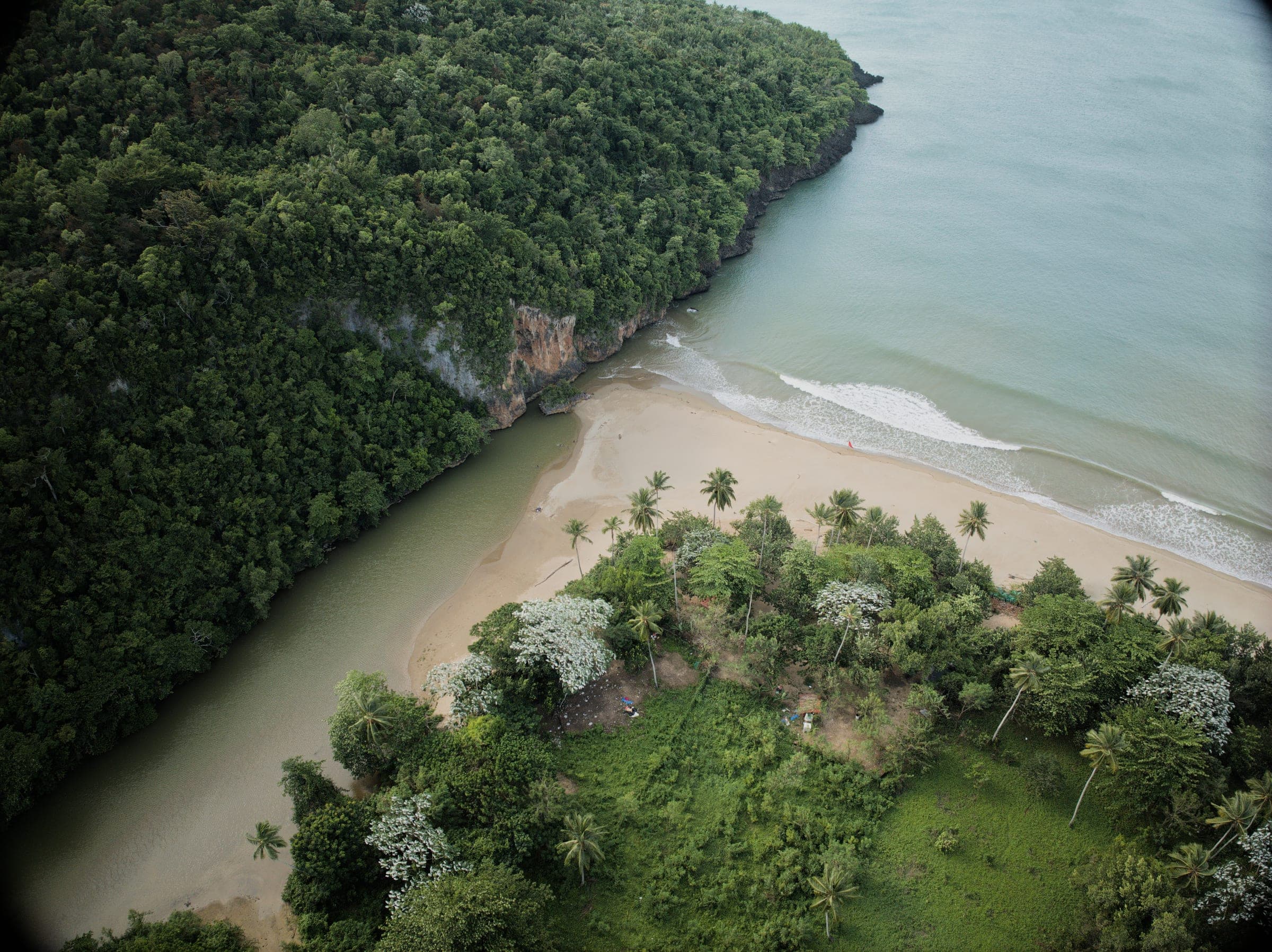
The beach itself is public. The first 60 meters from the high-tide line is the maritime zone — public domain that cannot be privately owned, only used under state concession. If a seller claims the sand, walk away from the seller, not necessarily the land behind it.
Under-declaring the price. It's still common practice to declare a lower price in the contract to reduce transfer tax. It's illegal, and it also inflates your capital-gains exposure when you sell. Declare the real price.
Skipping the survey because the title looks clean. Titles describe parcels; fences describe habits. In valleys that were farmland for generations, the two can disagree by entire building sites.
Taxes and incentives in one paragraph
Transfer tax is 3% of the appraised value, paid once at purchase. Annual property tax (IPI) is 1% of the value above a threshold that exempts most modest holdings (the threshold adjusts annually — roughly RD$10M). Tourism projects approved under the CONFOTUR law can carry significant exemptions from both, plus income-tax benefits — worth asking about on any development-scale purchase.
How we handle this in El Valle
We've bought, titled, deslinded, and developed land in this valley for years — we know its parcels, its families, and its histories, which in a generational farming valley is half the due diligence. When we sell or develop with a partner, the title work is handled end to end: verified title, completed deslinde, taxes current, real declared prices.
If you're considering land anywhere in Samaná — ours or not — the 30-minute conversation is free, and it will save you from at least one of the mistakes above.
Looking at land down here?
Bring us the parcel — or let us show you the ones worth looking at. 30 minutes, no pitch.